Construction Vehicles in English for Kids
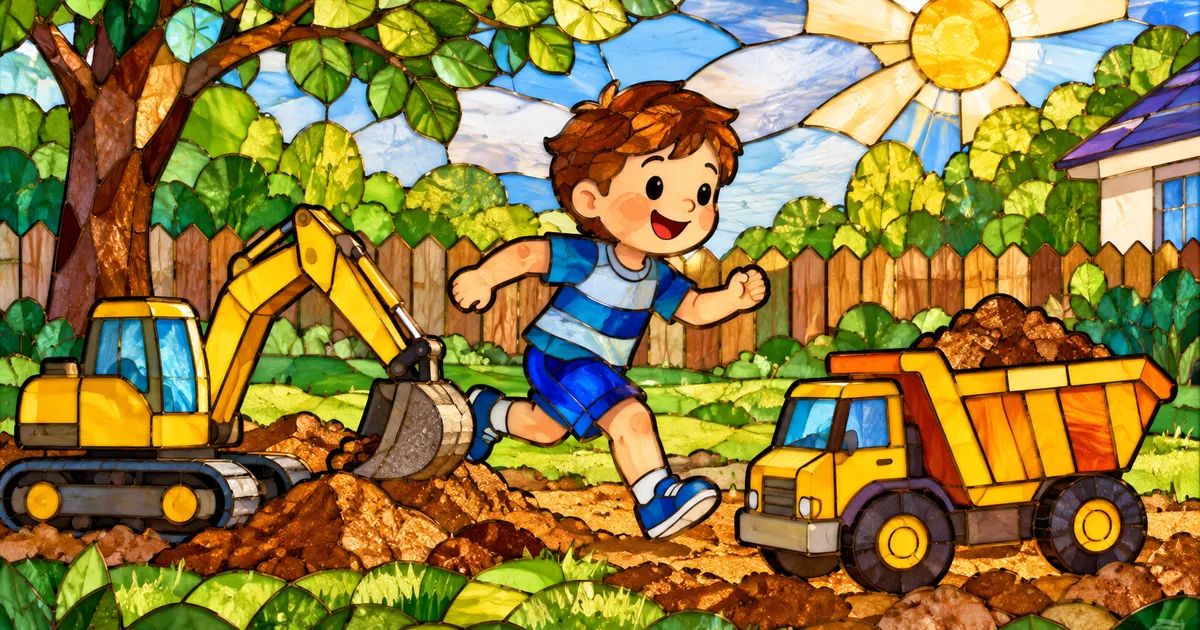
Sixteen core words give children a practical starting set for construction vehicles in english for kids. Begin with familiar machines such as lifting equipment, a bulldozer, and a dump truck, then introduce a grader and trencher. Link each machine to its job and an action: lifting equipment raises materials, a bulldozer pushes, and a dump truck carries. This guide provides meanings, model sentences, age-based activities, practice routines, and regional terms used across English-speaking countries.
📥 Construction Vehicles Practice Pack
Learn the words, choose the right vehicle, and use each term in context.
Leave your email — we'll send the PDF to your inbox.No spam — the PDF plus one short reminder. Unsubscribe anytime.
Core Construction Vehicle Words
Teach four or five words per lesson. Show a toy, photo, or drawing, pronounce the word, and pair it with one strong action. This makes construction vehicles in english for kids easier to recall and use in sentences.
The table shows each machine’s primary job and a model sentence. Some machines perform multiple jobs, but one meaning is enough for a first lesson.
Terms vary across English-speaking regions. Children may hear digger for an excavator or cement mixer for a concrete mixer. A road roller may be called a steamroller, even without steam. Accept the familiar form, then teach the precise term.
How to Use the Words in Context
Children master a word by combining it with a verb, object, and place. For construction vehicles in english for kids, practise patterns such as “The lifting machine raises the blocks,” “The excavator digs near the road,” and “The truck carries soil to the site.”
Move from naming to describing. Ask, “What is it?”, “What does it do?”, and “What is it carrying?” A beginner might answer, “A lifting machine.” A confident learner can say, “The yellow machine is lifting a long metal beam.” Both answers suit different learning stages.
Action verbs include dig, push, lift, carry, load, pour, flatten, turn, and build. Once sentences feel secure, add position words: “The forklift is beside the truck,” or “The excavator is behind the fence.”
A Simple Way to Introduce the Vocabulary
Start with a picture walk. Let your child inspect a construction scene and point to recognised machines. Name one vehicle, explain its job, and ask the child to repeat the phrase: “A bulldozer pushes soil.” Keep the first round short and stop before attention fades.
Next, cover the names and test recall. If a word does not come, give its first sound or mime the action. This pause matters: recalling excavator strengthens memory more than repeatedly hearing the answer.
When learning construction vehicles in english for kids, mix old and new words. A five-card set might contain three known vehicles and two new ones. Change pictures between sessions so the child learns each concept instead of memorising one drawing.
Quick Sorting Challenge
Say six words: crane, dump truck, excavator, forklift, bulldozer, and road roller. Ask your child to make three pairs: machines that lift, move earth, or work on roads. Different answers are reasonable when the child explains each choice in English.
Activities for Different Ages

For school-age kids, combine movement with pretend play. Stretch both arms upward like a crane, scoop with one hand like an excavator, or push a cushion like a bulldozer. Say each word before acting, then let the child give instructions.
For school-age kids, play construction-site detective. Put six vehicle pictures on a table and describe one without naming it: “It has a large drum. It carries concrete.” Your child identifies the concrete mixer, then creates a clue. The game practises listening, speaking, and precise description.
For school-age kids, add planning and comparison. Ask the learner to select machines for building a road, digging a foundation, or moving supplies, then explain each choice: “We need a grader because the ground must be level.” Older children can compare designs using heavier, smaller, more powerful, and easier to manoeuvre.
Practice Routines and Common Mistakes
A five-minute routine can cover recognition, recall, and speaking. Point to three pictures and ask for their names. Remove one and ask which vehicle is missing. Finish with a sentence about each machine. Repeat the set after a day and later that week.
Watch noun forms. Say “one excavator” but “two excavators.” Use an article with a single countable vehicle: “I can see a crane,” not “I can see crane.” For continuous actions, include the helping verb: “The bulldozer is pushing soil,” not “The bulldozer pushing soil.”
Children may confuse drive, operate, and ride. A worker can drive a dump truck, operate a crane, and ride in a vehicle. People may say “drive an excavator,” so accept that natural choice. Prioritise a complete sentence and the correct vehicle name.
- Try naming three construction vehicles during a five-minute picture-book session each evening.
- Practice contrasting digger, dumper, and crane with children aged four to seven.
- Use toy vehicles to model short sentences, then ask your child to repeat.
- Correct one mistake gently by repeating the full phrase with clear pronunciation.
- Review construction vehicles in English for kids with five quick matching cards.
When a word has several meanings or pronunciations, Cambridge Dictionary is a useful check before turning it into child-friendly examples.
Frequently Asked Questions
How Many Construction Vehicle Words Should My Child Learn at Once?
Four or five new words suit one short session. Mix them with two or three familiar words to balance success and challenge. Teach fewer when names are long. Review with pictures, actions, and sentences before adding another set. Explaining a machine’s job demonstrates stronger knowledge than repeating its name.
Should Our Tutors Teach British or American Vehicle Names?
Teach the form your child will probably hear, then mention regional alternatives without testing them. For example, digger is widely understood as an informal name for an excavator, while cement mixer and concrete mixer both appear in everyday English. Understanding both forms matters more than choosing one.
Can Children Learn These Words Without Toy Vehicles?
Yes. Photos, drawings, building-site views from a safe public place, and supervised videos provide strong examples. Children can draw a machine, label its parts, or act out its movement. Never approach working machinery or enter a construction area for vocabulary practice; learn from a safe distance.
What Is the Best Way to Remember Construction Vehicle Vocabulary?
Combine a picture, action, and sentence. When practising construction vehicles in english for kids, ask your child to name the machine, show its job, and use it in context. For example: “Excavator,” a digging motion, and “The excavator digs a hole.” Brief reviews across several days beat one long session.
- Start with four or five vehicle words and one clear action for each.
- Practice naming, describing, and comparing the machines in short sentences.
- Review the same words after a day, then use new pictures later in the week.
Want to see how these ideas work in a real lesson — try a LearnLink trial lesson.
Stay updated on our latest tips and resources by following us on Instagram LearnLink.